
The mistake almost everyone makes first
Here's what usually happens: the garage door starts squeaking, or someone notices the cable looks a little fuzzy where it wraps around the drum. One spouse wants to call someone. The other says, "It still opens and closes fine, we'll deal with it eventually." That second reaction is tempting because it's true in the moment — the door does still work. A worn roller or a fraying cable doesn't usually stop the door from functioning right up until the day it does, and when it finally fails, it tends to fail all at once and without warning.
That's the whole problem with these two parts. They're not like a noisy opener motor that gradually gets worse over months. Cables and rollers wear quietly for a long time, then let go suddenly — often the next time the door is used.
What these parts actually do
The springs do the heavy lifting, but the cables are what connect that spring tension to the bottom of the door. If a cable snaps while the door is up, that side of the door has nothing holding it, and it can drop hard and fast, sometimes off the track entirely. Rollers are what the door rides on inside the track. When they wear out — flat spots, cracked nylon, rusted bearings — the door doesn't roll smoothly anymore, it binds, jerks, and puts extra strain on everything else, including those cables.
So a worn roller isn't an isolated annoyance. It's often the thing that's quietly accelerating cable wear at the same time.
Signs worth paying attention to
- Fraying cable strands — individual thin wires sticking out or looking "broomed" where the cable wraps the drum near the bottom bracket.
- Rust streaks on the cable — a sign moisture has been sitting on it, which is common with Parrish's humidity and the salt-tinged air closer to the coast.
- A door that jerks or hesitates at the same spot every time it opens — often a flat-spotted or seized roller catching in the track.
- Grinding or rattling that's gotten noticeably louder over a few weeks, not just a one-time squeak.
- Visible gaps between the roller and the track, or a roller that looks loose in its stem.
- One side of the door looking lower or uneven when it's down — a sign tension isn't equal on both cables anymore.
Why this part of Florida is harder on these components
Heat and humidity cause metal parts to expand and contract more than they would in a drier climate, and that constant cycling speeds up wear on cables and roller bearings. Afternoon downpours during storm season mean moisture gets into the garage more often than homeowners expect, especially if the door seal is older. Add in salt air if you're closer to the coast, and rust shows up on cables and roller shafts faster than most people assume it should for the age of the door.
What's safe to check yourself, and what isn't
Looking is safe. Touching the cables while the door is closed and the opener is unplugged is reasonably safe. Actually loosening, adjusting, or replacing a cable is not a DIY job — these cables are under serious spring tension, and a cable or spring that lets go while someone's hands are on it causes real injuries. Rollers are a little more forgiving to inspect closely, but replacing them still means working around a door that's under tension, on a track that needs to stay aligned.
If you want to settle the argument without spending money first: open and close the door a few times while watching the cables and rollers, not the door itself. If anything looks frayed, rusted, uneven, or like it's catching, that's your answer — it's time to get it looked at, not time to wait for the next noise.
When to call Precision Garage Door of Parrish
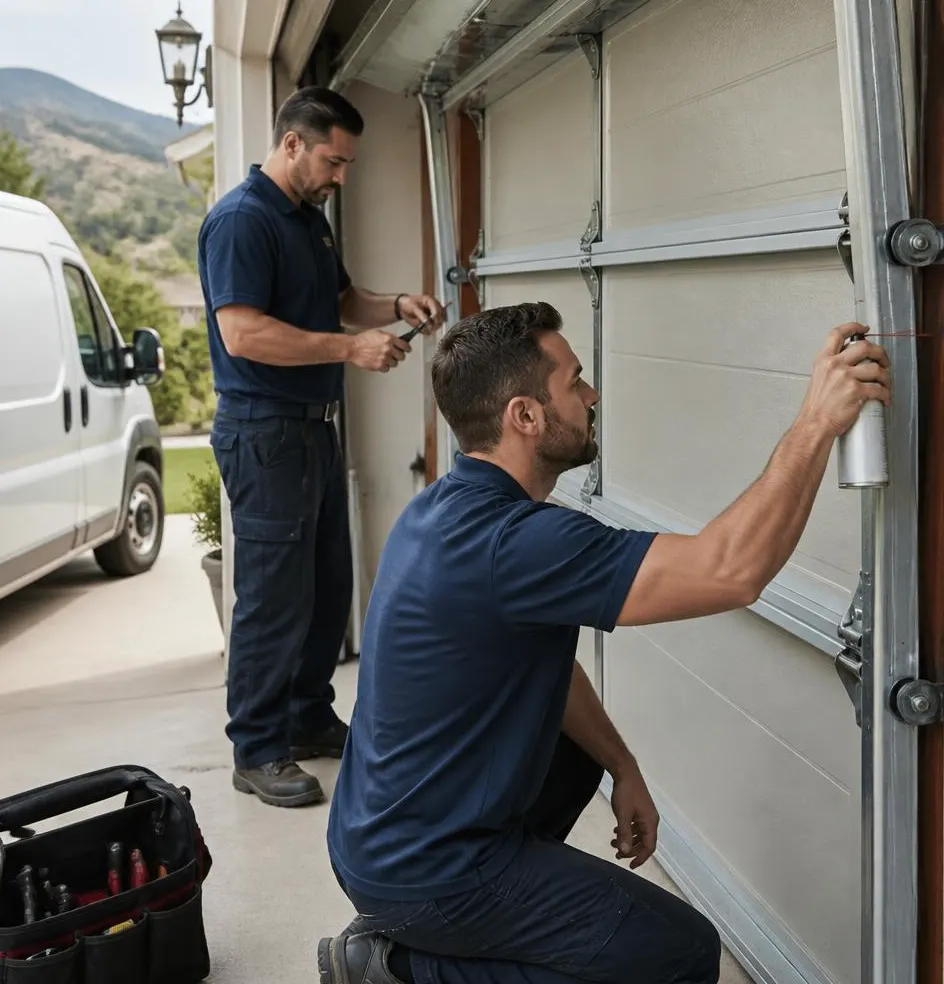
If you're seeing frayed strands, rust on the cables, or a roller that's clearly worn or cracked, that's exactly what our Cable & Roller Replacement service is for — we replace the worn components before they fail, not after. If you're not sure whether what you're looking at is normal wear or a real problem, our Garage Door Maintenance & Tune-Up covers a full inspection of cables, rollers, tracks, and hardware, and we'll tell you honestly what can wait and what can't.
If your garage door in Parrish, FL is squeaking, jerking, or showing any fraying or rust on the cables, call Precision Garage Door of Parrish before it becomes a sudden, loud failure instead of a planned repair.