
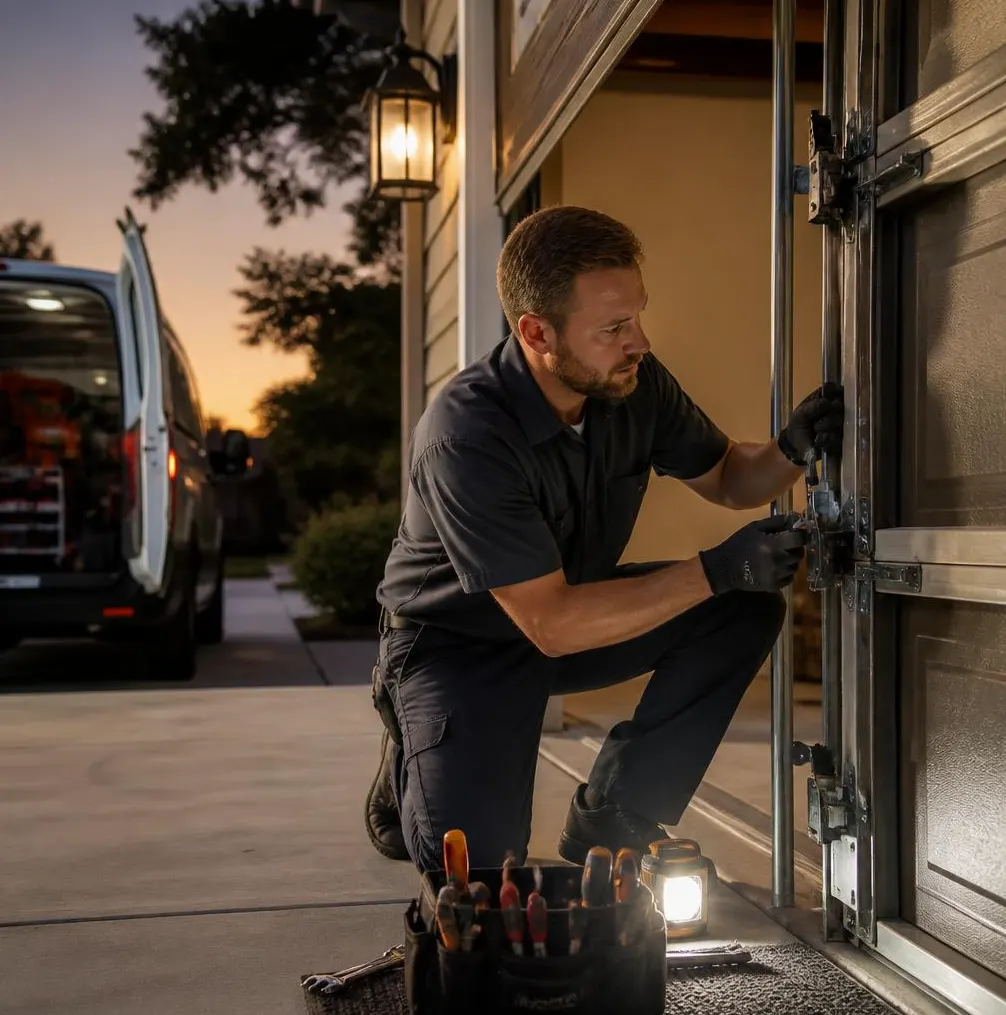
What a technician sees on these calls
A few weeks after closing, we get a call that starts the same way almost every time: "The inspector said the garage door was fine." Then the homeowner describes a door that groans going up, a spring that let go during the first cold snap, or an opener that won't reverse when something's in the way. General home inspectors check that the door opens and closes - they rarely pull a cover off a spring, test balance, or check whether the panels can handle a tropical storm's wind load. In a market like Parrish, where humidity swells wood and composite panels and salt air creeps in from the coast, those gaps matter. Here's what to check yourself, either before you make an offer or right after you get the keys.
The walk-through checklist
1. Spring type and surface condition
Stand under the door (with it closed) and look at the spring above the header - usually one or two torsion springs on a bar, or extension springs along the upper tracks on older setups. Surface rust, flaking paint, or a visible gap in the coils means the spring is near the end of its life. If it fails: the door either won't budge or slams down hard enough to damage the panel or anything underneath it.
2. Panel condition, especially at the bottom
Run your hand along the bottom two panels. Soft spots, bubbling paint, or a slightly swollen feel in a wood or composite door usually means moisture has been getting in - common after years of humidity and standing water from afternoon downpours. If it fails: the door loses structural strength exactly where it needs it most during storms.
3. Track alignment
Look at the vertical tracks from the bottom up. They should run perfectly straight with even, consistent gaps on both sides. Any visible bend, or a gap that widens as you look up, points to a door that's been forced off track at some point. If it fails: the door can bind, jump the rollers, or come down unevenly.
4. Roller and cable wear
Check the rollers where they sit in the track - cracked plastic or flat spots on nylon rollers, or rust and fraying on the cables that run down to the bottom brackets. If it fails: a frayed cable can snap under tension, and a cracked roller can jump the track mid-cycle.
5. Opener age and the safety reverse test
Note the brand and manufacture date on the opener's motor unit sticker. Then test it: place a 2x4 flat on the ground where the door closes. The door must reverse immediately on contact. If it fails: that's a safety issue, not a convenience one, and it should be addressed before anyone uses the garage normally.
6. Photo-eye sensor alignment
Look at the two small sensors a few inches off the floor on each side of the track. They should point directly at each other with solid, steady lights. If it fails: the door may refuse to close at all, or worse, close without checking for obstructions - often caused by sensors bumped out of alignment by a stored bike or lawn equipment.
7. Bottom seal and weatherstripping
Check the rubber seal along the bottom of the door for cracking, gaps, or a flattened section that no longer makes contact with the slab. If it fails: wind-driven rain during storm season gets under the door, and it's also an easy entry point for insects and small pests.
8. Wind-load rating of the door itself
Look for a label on the inside of the door (often near the top panel or on the end stile) noting a wind-load or impact rating. Older doors installed before current wind-load expectations may not have one. If it's missing or unclear: it's worth having a technician confirm what the door can actually handle before hurricane season puts it to the test.
9. Manual balance test
Disconnect the opener using the red release handle, then lift the door halfway by hand. A properly balanced door stays where you leave it. If it fails - sliding down or shooting up - the springs are miscalibrated, which puts extra strain on the opener and shortens its life.
When to call Precision Garage Door of Parrish
If you've found rust on the springs, a door that won't balance, or panels showing signs of moisture damage, those aren't DIY fixes - torsion springs in particular are under heavy tension and have caused serious injuries when handled without the right tools. Our technicians handle Garage Door Spring Repair and full Garage Door Maintenance & Tune-Ups for homeowners across Parrish, Ellenton, Palmetto, Bradenton, and Lakewood Ranch, and we'll walk you through exactly what we find and why, no guesswork. If the door's off track or the opener is failing its reverse test, we can usually diagnose and fix it same-visit.
Buying a home in Parrish is a good time to get an honest second opinion on a part of the house most people never think about until it fails. Call Precision Garage Door of Parrish for a full inspection before you settle in - we'll tell you exactly what's solid, what needs attention, and what can wait.